The Tweed Coast sits in a subtropical band where humidity stays high year round, salt hangs in the air within several kilometres of the water, and summer heat pushes engine bays well above ambient. Those three factors work on vehicles constantly, and the damage they cause is often invisible until something fails.
The short version
- The Bureau of Meteorology records a mean annual rainfall of 1,535.1 mm at Coolangatta, station 040717, with mean 9am relative humidity around 65 to 73 per cent depending on the season.
- Airborne salt accelerates corrosion on brake rotors, suspension components and underbody steel, even on vehicles that never drive on the beach.
- Sustained humidity degrades rubber components including belts, hoses and suspension bushings faster than dry climates.
- Temperature cycling between hot engine bays and cooler overnight conditions stresses battery cells and shortens battery life in subtropical climates.
- A preventative inspection at each service interval catches corrosion, rubber degradation and electrical issues before they strand you.
What the climate record says about conditions here
Coolangatta Airport is the closest long-running Bureau of Meteorology station to the Tweed Coast service area. Station 040717 records a mean annual rainfall of 1,535.1 mm. Twenty kilometres inland at Murwillumbah (Bray Park), station 058158, the figure is 1,579.9 mm.
The rainfall is not spread evenly. March averages about 210.9 mm at Coolangatta. August and September average about 43 to 53 mm. That means vehicles spend months in wet, humid conditions through summer, then dry out through winter, then get wet again. The cycling between wet and dry is harder on metal and rubber than staying consistently one or the other.
Mean 9am relative humidity at Coolangatta ranges from about 65 per cent in winter to about 73 per cent in summer. Those readings are taken at 9am, before the heat of the day. Inside a parked car or under the bonnet on a hot afternoon, the effective moisture exposure is higher still.
How salt air attacks steel components
Salt is hygroscopic. It attracts and holds moisture from the air. A thin film of salty moisture on a steel surface is an electrochemical cell, and it corrodes the metal underneath. You do not need to drive on the beach for this to happen. Airborne salt particles travel several kilometres inland from the coast, settling on every exposed surface.
Brake rotors
Brake rotors are bare cast iron. They have no protective coating because any coating would interfere with braking friction. That makes them the first component to show surface rust in a salty, humid environment. A thin orange film on the rotors after the car sits overnight is normal. The first few brake applications each morning scrub it off. But if a car sits for a week or more, the corrosion deepens, pitting the rotor surface and creating rough spots that cause a pulsation when braking. A brake inspection will pick up pitting before it becomes a problem.
Suspension and steering
Ball joints, tie rod ends and control arm bushings are all exposed to whatever the road throws at them. Salt spray from wet roads coats these components and sits in the crevices around the boots and seals. Once a rubber boot cracks, salt and moisture reach the grease-packed joint inside. From that point the joint wears rapidly. A suspension check during each service catches cracked boots before the joint itself is damaged.
Underbody and exhaust
The underside of a car collects salt-laden road spray every time it rains. Modern vehicles have better underbody protection than they used to, but fasteners, brackets, heat shields and exhaust components still corrode. A seized bolt on a rusted bracket turns a routine repair into a much longer job. Regular underbody inspections, which are part of a general service, keep track of what is deteriorating.
How humidity degrades rubber
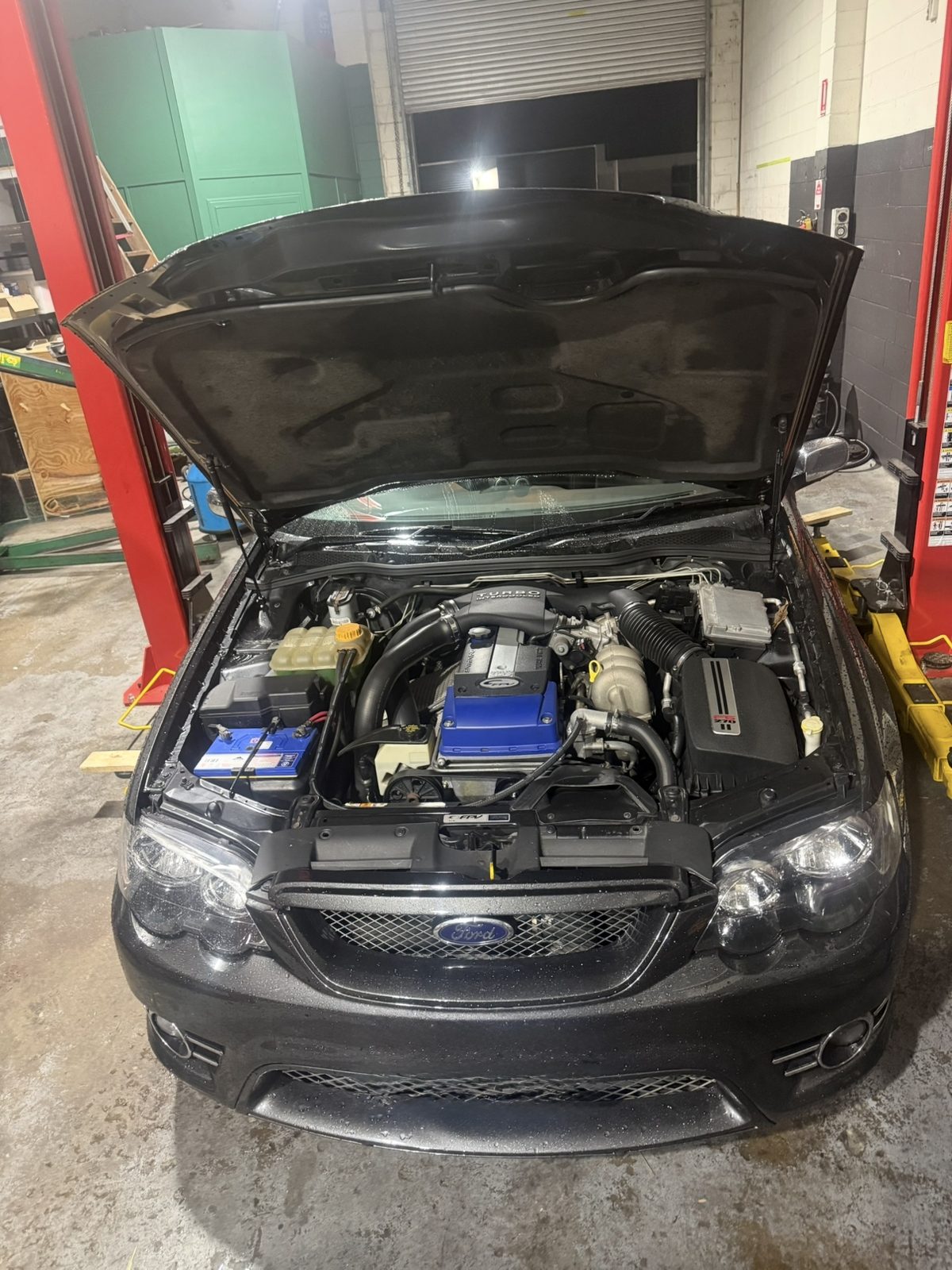
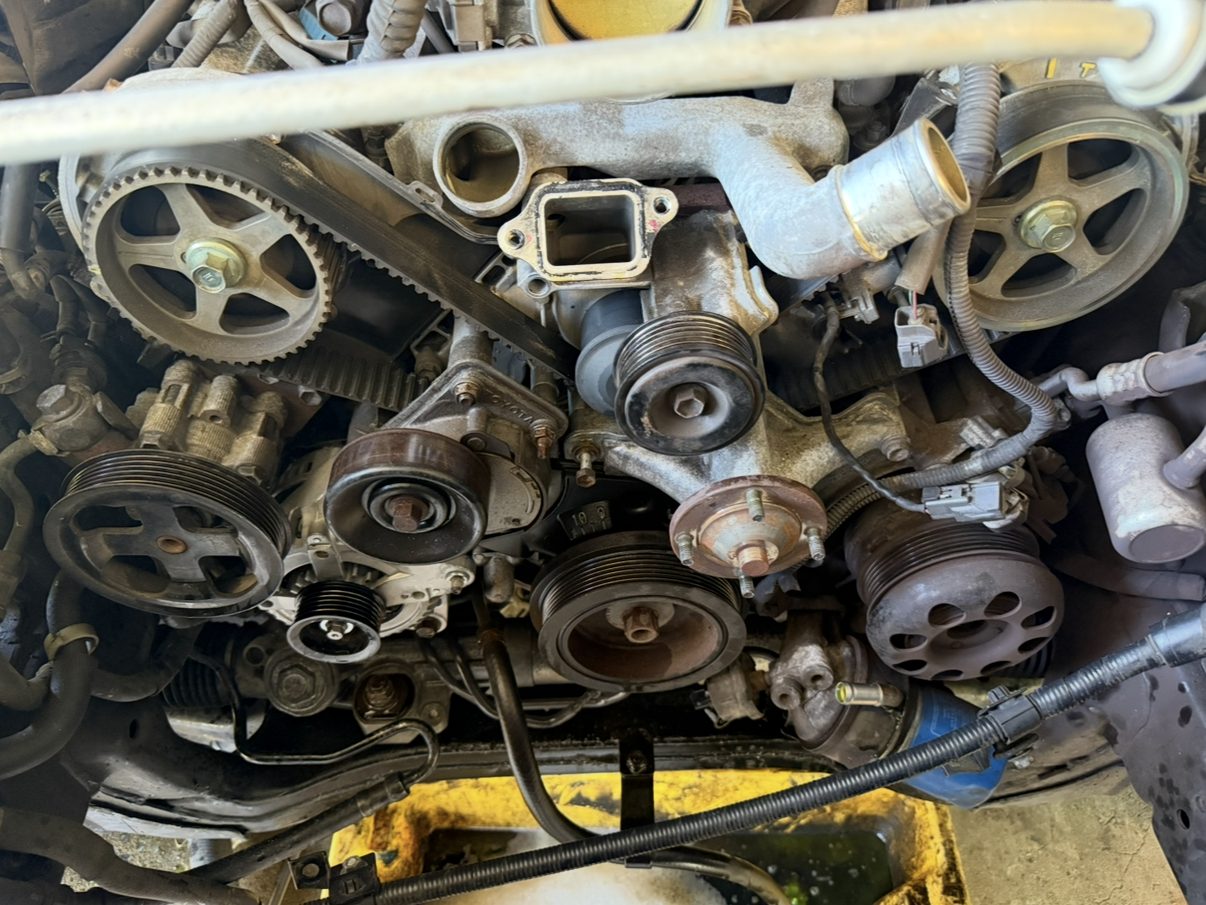
Rubber components in an engine bay include the serpentine belt, timing belt (on engines that have one), radiator hoses, heater hoses, vacuum lines and various boots and seals. All of them are made from synthetic rubber compounds that degrade over time through a process called hydrolysis, where moisture breaks down the polymer chains.
In a dry climate this process is slow. In the Tweed, where the air is humid year round and engine bays cycle between hot and cool every day, it is faster. Rubber that looks fine on the outside can be hardened and cracked on the inside face where it contacts the component it seals. A belt that snaps or a hose that splits does not give much warning. The visual check during a logbook service is the early warning system.
Suspension bushings are rubber too. They sit between metal components and absorb road vibration. When they harden and crack, the suspension develops clunks and loose handling. The car still drives, so the problem gets ignored until it fails a roadside check or until the worn bushing damages the component it was supposed to cushion.
What temperature cycling does to batteries
Heat is harder on car batteries than cold. A battery sitting in an engine bay that reaches 60 or 70 degrees C on a summer afternoon in Tweed Heads is losing capacity faster than one in a cooler climate. The heat accelerates the chemical reactions inside the cells, including the unwanted ones that degrade the plates and electrolyte.
Then at night the temperature drops. The battery contracts and expands with each cycle. Over hundreds of cycles the internal connections weaken and the plate material sheds. A battery rated for 4 to 5 years in a temperate climate may last 3 to 4 years here. The failure pattern is that the battery starts fine for months and then one morning it does not.
A battery test during a service measures the cold cranking amps and the state of health. It takes about two minutes and tells you whether the battery is on its way out before you find out by being stranded.
The cooling system under sustained heat
An engine cooling system is designed to maintain the engine at its operating temperature regardless of ambient conditions. In a subtropical climate the cooling system works harder and for longer periods than in a cool one. The radiator, water pump, thermostat and hoses carry heated coolant constantly during summer driving.
Coolant itself degrades over time. The corrosion inhibitors in the fluid break down, and the coolant becomes acidic. When that happens it attacks the aluminium in the radiator, heater core and water pump housing from the inside. Cooling system repairs catch this by checking coolant condition and replacing it on schedule. Conventional coolant is due every 2 years or 40,000 km. Long-life coolant lasts up to 5 years or 150,000 km.
A coolant system under pressure with degraded hoses is the setup for a roadside breakdown. The hose looks fine cold and cracks under hot pressure. A squeeze test during a service catches hoses that have gone soft or bulgy.
Electrical connections and corrosion
Modern vehicles have dozens of electrical connectors, sensors and earth points. Each one is a potential corrosion site. Salt and moisture work their way into connectors and create a green or white buildup on the terminals. The connection becomes intermittent, then fails.
The symptoms are varied and confusing. A corroded earth point can cause dim headlights on one side, intermittent starting, erratic gauges or warning lights that come and go. A corroded sensor connector can trigger a check engine light with a fault code that points at the sensor rather than the wiring. Diagnostic work that includes a wiring inspection saves chasing false codes.
Battery terminals are the most common electrical corrosion point. The white or blue-green crust that forms on the terminals increases resistance in the main power circuit. It can prevent the car from starting even when the battery itself is fine. Cleaning terminals and applying a protective grease is part of a standard service.
What a preventative inspection covers
A service that only changes the oil and filter misses most of the damage described above. A proper inspection covers the brakes (pad thickness, rotor condition, caliper movement), the suspension (bushings, ball joints, boots), the cooling system (hose condition, coolant level and colour, fan operation), the battery (voltage, CCA, terminal condition), the belts (cracking, glazing, tension) and the underbody (corrosion, leaks, damaged components).
That list looks long but it is mostly visual. Most of it takes minutes. The value is in catching something at the early stage, when it costs a fraction of what it would cost as a breakdown or a secondary failure.
Where to start
If your car lives on the Tweed Coast, it is worth asking when the last inspection went beyond an oil change. We see vehicles from Tweed Heads, Coolangatta, Kingscliff and across the service area with corrosion and rubber degradation that could have been caught a service ago.
Valley View Automotive is in Tweed Heads South. Every service includes the inspection items listed above, and we walk you through what we find before doing any work. If something can wait, we say so. Get in touch for a free quote on your next service.